
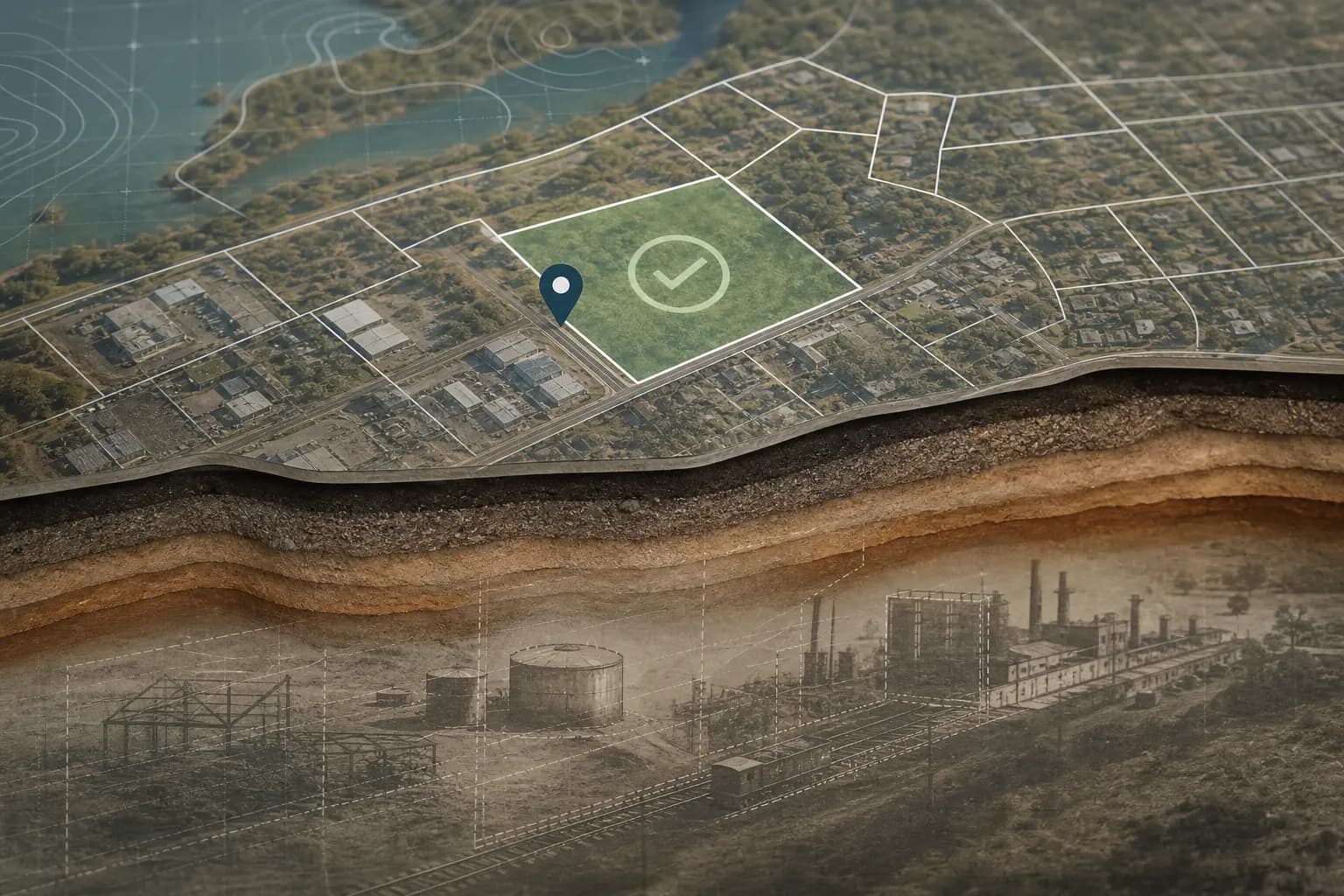
A contaminated-land register search is one of the first documents many property teams ask for. It is also one of the easiest to over-read.
A clean result may show there is no current listing, notice or recorded matter for the searched parcel in a particular dataset on the search date. It does not prove the land is uncontaminated, that surrounding land is irrelevant, or that historic use can be ignored.
For conveyancers, consultants and buyer's agents, the safer message is simple: registers are essential evidence, not clearance certificates. The next step is to understand what each register covers, what it leaves out, and whether the client's intended use needs a broader review.
Why clean results are often misunderstood
Clients often ask a binary question: "Is the property contaminated?" A register can rarely answer that on its own. Most public systems are built around known, reported, assessed, regulated or notified matters. They do not capture every former dry cleaner, workshop, service station, informal fill area, offsite plume or unreported incident.
The risk is treating a limited search as if it has answered a technical site-condition question. A conveyancer may need to brief the client on disclosure limits. A consultant may need to explain why a PSI is still warranted. A buyer's agent may need plain-English referral language before an auction, option date or unconditional exchange.
What official sources say about the limits
In Queensland, the Environmental Management Register and Contaminated Land Register are central searches. The Queensland Government says an EMR/CLR search can show whether land is listed, any notified contaminants or notifiable activities, and whether a site management plan applies. It also cautions that search results do not include contamination or notifiable activities that have not been notified to government.
That limitation is important because owners of EMR/CLR-listed land must give written notice before selling or disposing of the land, and from 1 August 2025 that requirement forms part of the Queensland seller disclosure process. The official buying and selling contaminated land guidance supports disclosure of listed land. It does not turn a non-listing into proof that there is no contamination.
In NSW, the EPA's list of notified sites is explicit: it does not contain all contaminated sites in NSW, and absence from the list does not necessarily mean a site is not contaminated. The separate record of notices is a defined public record of formal notices and related matters, rather than a complete map of every notified or potentially contaminated parcel.
Victoria frames the question through duties and assessment. EPA Victoria's guidance on buying, selling or developing land says landowners have duties to manage and disclose known contamination risks, even if they did not cause the contamination. It also says buyers should consider a Preliminary Site Investigation where no assessment exists. The Victorian public audit register gives access to PRSA and environmental audit reports submitted since May 1991, but it is not a complete inventory of all contaminated land.
Western Australia adds another practical caution. DWER's 2025 guideline on identification, reporting and classification of contaminated sites describes classification as a process that may draw on licences, GIS information, land ownership, land use, zoning, environmental values and local or state information. It also notes that Form 2 is the only way to access information on some reported or awaiting-classification sites. A public-facing result may therefore be only part of the record available through the statutory access pathway.
What to check after a no-hit search
First, check historic use. A residential dwelling today may have been a workshop, service station, market garden, depot or filled land decades ago. If the transaction involves redevelopment, basement excavation, childcare, aged care, food production, subdivision or a more sensitive use, current appearance and current zoning are not enough.
Second, look beyond the title boundary. Contamination risk can move through groundwater, vapour, drainage lines, fill movement and flood pathways. A clean result should not end the enquiry if there is a regulated site, former fuel use, landfill, dry cleaner or industrial activity next door or upgradient.
Third, record the search method. Parcel identifiers change, lots are consolidated or subdivided, datasets update on different cycles, and some searches depend on the correct title, lot-plan, suburb, radius or certificate pathway. Capture the search date, dataset, search terms and stated limitations.
Finally, connect the result to client intent. The same no-hit search can mean different things for an owner-occupier, a developer planning bulk excavation, a lender, or a consultant scoping intrusive investigation.
A register-literate workflow
Start with the statutory and official searches required for the jurisdiction and transaction. Treat them as the baseline, not the whole evidence pack.
Then ask three questions:
- Does the subject land have a listing, notice, audit, PRSA, classification or site management plan?
- Is there a plausible offsite source, pathway or receptor issue nearby?
- Would the client's proposed use make a data gap material before exchange, auction, option exercise or consultant scoping?
If the answer to any question is yes, document the follow-up: an EMR/CLR certificate, NSW EPA search, council certificate, vendor report request, PSI, PRSA/audit advice, insurance or finance enquiry, special condition, or referral to an environmental consultant.
For conveyancers, consultants and buyer's agents, make the limitation explicit: no listing was found in the searched register on the search date, but official sources say registers do not capture all contamination. Then record whether legal, technical or buyer-advice follow-up is needed.
How Enviro-D helps with early screening
Enviro-D can help property professionals screen contaminated-land signals alongside parcel context, nearby regulated or notified sites, historic land-use prompts, planning layers, flood and groundwater-relevant context, and source-linked caveats. The aim is to turn a register result into a documented triage note: what was checked, what was found, what remains uncertain and who should be briefed next.
Enviro-D does not certify land as clean, detect contamination, replace statutory searches, replace a PSI or provide legal advice. It screens public and configured datasets, flags follow-up questions, and helps teams brief conveyancers, consultants and clients earlier.
If a transaction is relying on "no register hit" as the whole contamination conclusion, run an early Enviro-D screen before the next commitment date. Use the output to decide whether to proceed with recorded limitations or order a targeted search, PSI, vendor question or specialist referral.
Sources and further reading
- Queensland Government: how to search the contaminated land registers
- Queensland Government: buying and selling contaminated land
- NSW EPA: list of notified sites
- NSW EPA: record of notices
- EPA Victoria: buying, selling or developing land
- EPA Victoria: public registers
- WA DWER: identification, reporting and classification of contaminated sites guideline