
On 19 August 2026, the Australian Government made Australia’s first four National Environmental Standards under the reformed national environment laws.
One of those standards is devoted entirely to Data and Information. The other three standards cover Matters of National Environmental Significance, Environmental Offsets and Community Engagement. The standards will begin applying to environmental assessment and approval decisions when the new approval tests commence, on or before 1 December 2026.
Why the Data and Information Standard matters
For the environmental and property industries, the Data and Information Standard is particularly significant. It establishes expectations for environmental information used to support decisions, including that data should be representative, transparent, comparable, reusable and ethical.
The Standard also establishes requirements around how environmental information is collected, shared and used. That matters because environmental due diligence has traditionally relied on information distributed across numerous government registers, spatial portals, PDFs, historic records and datasets.
From environmental data to environmental infrastructure
The difficulty is rarely that environmental information does not exist. The challenge is finding it, understanding its provenance, determining whether it is current and bringing different information sources together in a form that can support a defensible decision.
The creation of a national Data and Information Standard suggests that this is changing. Environmental data is increasingly being treated as part of the underlying infrastructure of the regulatory system rather than simply supporting material attached to an assessment.
That direction is reinforced by Environment Information Australia, which has been established to improve access to high-quality environmental data and information from across Australia.
Why this matters for property and environmental due diligence
A property does not experience environmental issues in isolation. Historical land use may indicate a contamination risk. Groundwater can create a migration pathway. Ecological or heritage constraints can affect development potential. Natural hazards can influence both design and long-term asset risk.
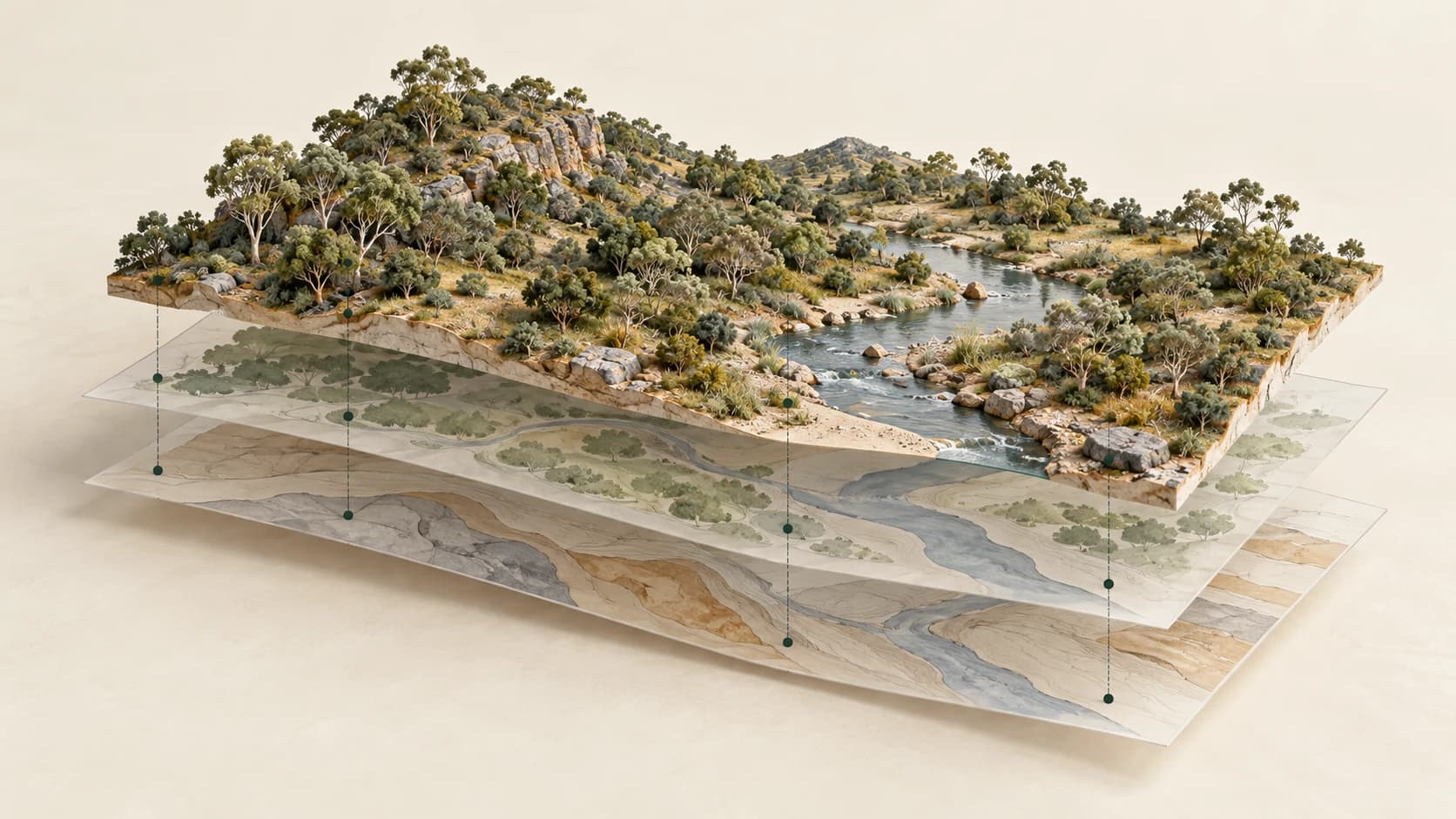
Understanding these relationships requires more than access to individual datasets. It requires environmental information that can be consistently located, compared and interpreted.
Where Enviro-D fits
This direction closely reflects the problem Enviro-D is designed to solve. The value is not simply in having more data. It is in making the right data accessible, traceable and useful at the point a property or project decision is being made.
As Australia’s environmental regulatory framework evolves, the quality and accessibility of environmental information will increasingly matter just as much as the rules applied to it.