
The regulatory framework surrounding PFAS continues to evolve in New South Wales.
From 1 October 2026, licensed landfills and sewage treatment plants across NSW are required to undertake PFAS monitoring under a new Chemical Control Order issued by the NSW Environment Protection Authority.
The requirements include PFAS monitoring at specified locations, approved sampling and analytical methods, quarterly monitoring and reporting of results to the EPA. The program is designed to establish more consistent information about PFAS concentrations and movement through the environment.
Importantly, landfills and sewage treatment plants are generally considered secondary receivers of PFAS rather than the original source. PFAS can arrive at these facilities through waste and wastewater generated elsewhere. Understanding where PFAS is detected is therefore only one part of understanding the environmental risk.
PFAS NEMP 3.1
The monitoring changes coincide with NSW EPA’s adoption of the latest PFAS National Environmental Management Plan — NEMP 3.1, released in June 2026.
Changes incorporated into NEMP 3.1 include updated drinking-water guideline values, revised ecological guideline values for PFOS in freshwater, interim application of those freshwater ecological values to marine waters and new biota screening thresholds for PFOS in water.
The NSW EPA has confirmed that NEMP 3.1 should now be used. One important aspect of the updated framework is its consideration of environmental pathways. For example, exceedance of the PFOS biota screening threshold may trigger further investigation into whether PFOS is accumulating through aquatic food webs.
A source–pathway–receptor problem
PFAS is a useful example of why environmental due diligence increasingly needs to look beyond a property boundary.
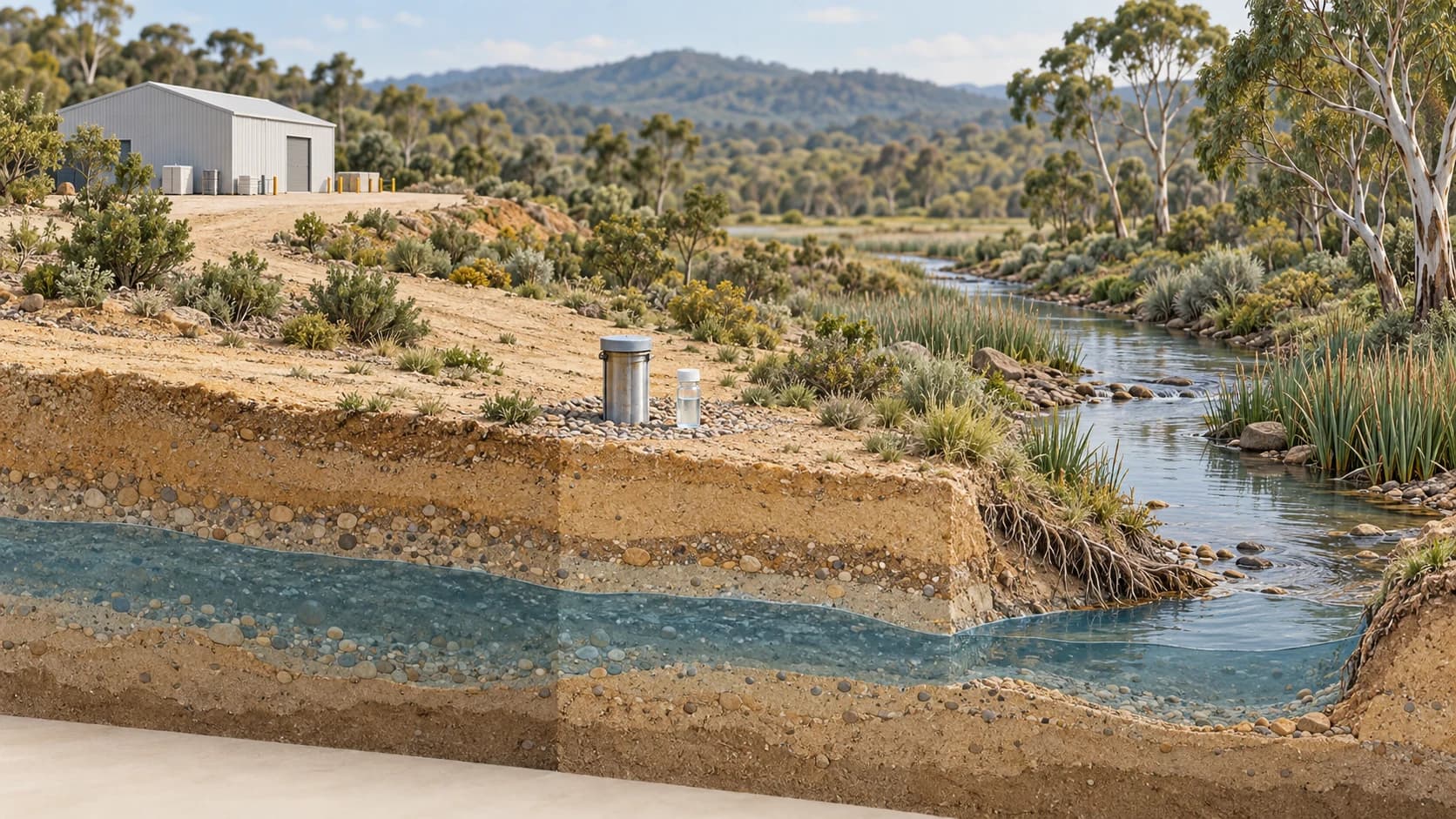
A potential source may be associated with a historical industrial activity, firefighting facility, waste facility or another land use. Groundwater or surface water may provide a pathway. The ultimate environmental or human-health receptor may be located some distance from the original source.
Historic land use, groundwater information, surface-water features and surrounding potentially contaminating activities therefore need to be considered together rather than as separate environmental datasets.
The EPA also notes that the presence of PFAS does not automatically mean land must be notified under section 60 of the Contaminated Land Management Act 1997. Reporting obligations depend on the circumstances, including the nature and source of the contamination.
Where Enviro-D fits
For consultants, landowners and developers, PFAS reinforces the importance of context rather than treating any individual result as a simple pass-or-fail threshold. Enviro-D can support the desktop stage by bringing together site history, nearby potentially contaminating activities, groundwater, surface-water and other property-level environmental information before specialist investigation begins.
As PFAS regulation and scientific guidance continue to develop, access to current environmental information — and an understanding of how that information relates spatially — will remain central to effective site assessment.