
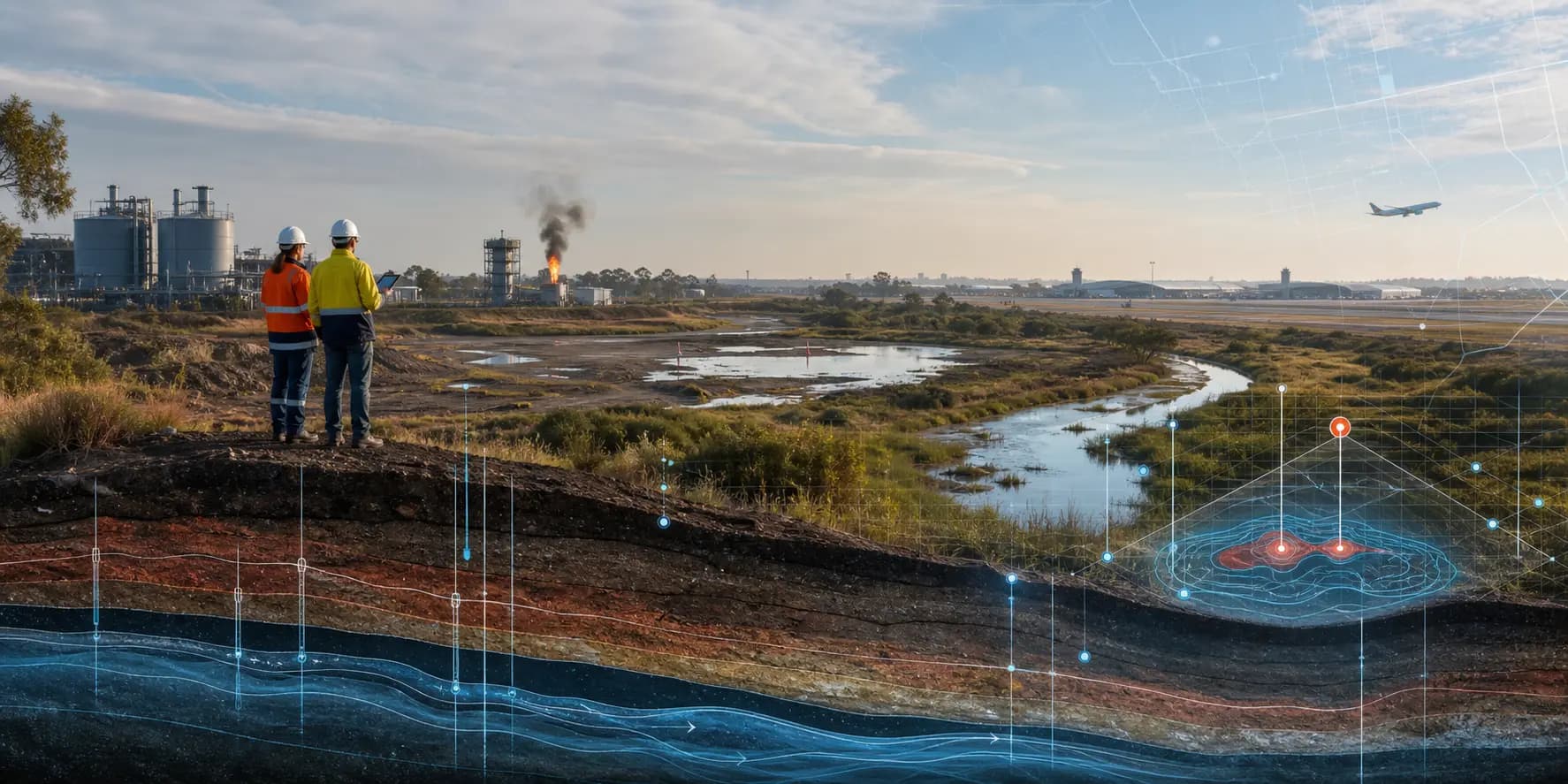
Many brownfield feasibility models still sort sites into simple buckets: former heavy industry, obvious service station risk, or low-risk commercial land. That shortcut can miss PFAS where firefighting foam history, imported fill, water pathways or material reuse decisions touch the site.
For developers, consultants and portfolio teams, the practical question is when the possibility is material enough to change acquisition terms, consultant scope, earthworks planning, reuse assumptions or an investment committee contingency.
NEMP 3.1 is a timely reason to update old assumptions
The Australian Government's PFAS NEMP publication page describes the PFAS National Environmental Management Plan as Australia's national guide for managing PFAS contamination in the environment, developed by Australian, state, territory and New Zealand governments through the Heads of EPAs Australia and New Zealand.
DCCEEW says PFAS NEMP 3.0 added or updated guidance for investigation and risk assessment, contaminated-land remediation, resource-recovery product reuse and risk-based criteria for reuse of PFAS-contaminated biosolids. PFAS NEMP 3.1 was released in May 2026 and incorporates the June 2025 Australian Drinking Water Guidelines update and March 2026 updated ANZG PFOS freshwater and marine guideline values.
NHMRC's updated drinking-water guideline values are PFOS 8 ng/L, PFOA 200 ng/L, PFHxS 30 ng/L and PFBS 1000 ng/L. Those numbers should not be lifted into a generic property conclusion without context. A site may have no drinking-water exposure pathway, and state implementation can differ. They are, however, a clear prompt to check whether old Phase 1, PSI, DSI or portfolio-screening templates are still using superseded PFAS assumptions.
Why fill and future reuse create PFAS exposure for property teams
DCCEEW notes that PFAS contamination has been found where PFAS-containing firefighting foams were used, and that PFAS can migrate through soil, surface water and groundwater into adjoining environments. That is why airports, Defence-adjacent land, fire-training areas, fuel terminals, emergency-service sites and some industrial estates are common early-screening triggers.
The harder diligence issue is often materials management. A site with no obvious manufacturing history may still include unknown imported fill, historic stockpiles, road base, landfill-derived material, wastewater or biosolids exposure, or spoil from nearby works. NEMP 3.0's resource-recovery and biosolids guidance is a reminder that future reuse decisions need evidence, not a default assumption that material can move freely.
Reuse also changes the risk frame. Soil left under a capped commercial slab, soil moved to open space, and soil sent to another receiving site are different questions. SA EPA's site contamination guidance highlights that remediation levels should match the future intended land use. The same commercial discipline applies to acquisition and delivery decisions: proposed use, receptors and material destination need to be clear before PFAS risk is scoped.
When to flag PFAS before exchange or excavation
PFAS screening belongs early where any of these indicators appear:
- current or former airports, fire stations, fire-training grounds, Defence facilities, fuel storage, bulk-liquid handling or emergency-response areas
- nearby or upgradient properties with plausible AFFF, landfill, wastewater, plating, chemical storage or industrial fire history
- unexplained fill, large stockpiles, reclaimed land, former quarries, informal dumping, imported road base or undocumented spoil movements
- proposed excavation, dewatering, basement works, drainage changes, soil reuse, offsite disposal or import of fill from a third party
- groundwater use, surface-water connection, wetlands, creeks, bores, sensitive ecological receptors or drainage pathways beyond the boundary
- future residential, childcare, school, aged-care, open-space or food-production uses where exposure assumptions may become more sensitive
A trigger is not a finding of contamination. It is a reason to brief a suitably qualified consultant before the deal team relies on a low-risk allowance, reuses fill in the civil strategy, or writes option conditions that leave no room for investigation.
Questions to put in the consultant brief
A useful PFAS brief should make the commercial decision visible. Ask the consultant to confirm which guidance version and jurisdictional position will be used, whether previous reports pre-date NEMP 3.1, and whether any sampling scope should be updated because drinking-water, surface-water or reuse assumptions have changed.
For fill and materials, ask where the material came from, where it is proposed to go, what records exist, whether resource-recovery or biosolids guidance is relevant, and whether stockpile or soil classification work is needed before tender or bulk earthworks. For pathways, ask whether the conceptual site model covers soil, groundwater, surface water, sediment, drainage lines, service trenches and offsite migration.
NSW EPA's NEMP 3.0 position statement is a useful caution for non-specialists: a guideline exceedance does not automatically mean environmental or human-health risk, but it can trigger further investigation. The same caution works in the other direction. A desktop screen with no public register hit is not a clearance certificate if the source history, fill history or water pathway has not been tested.
What portfolio and IC teams should record
For portfolio owners, banks, insurers and joint-venture partners, PFAS screening is strongest when it produces a repeatable exception record rather than a one-off map screenshot. Record the source indicators checked, search date, guidance version, confidence level, material-movement exposure, known reports reviewed, data gaps and recommended next action.
For investment committees, keep the conclusion practical:
Record the evidence against the actual decision:
- Acquisition terms: whether PFAS indicators justify a condition precedent, vendor information request, price contingency or hold point.
- Consultant scope: which source areas, receptors, materials and guidance versions need specialist review.
- Civil strategy: whether excavation, dewatering, reuse, import or disposal assumptions depend on unverified fill history.
- Future use: whether the proposed land use is more sensitive than past assessments assumed.
- Portfolio governance: whether the record should be routed for specialist review, monitored, or closed with documented limitations.
This approach avoids treating PFAS as an automatic deal breaker. It also avoids burying a material data gap until the project is already committed to a construction method or reuse strategy.
How Enviro-D helps with early PFAS triage
Enviro-D can help property teams screen candidate sites and portfolios for PFAS-likelihood indicators: AFFF source types, airport and Defence-adjacent context, industrial and wastewater/fill signals, nearby notified or regulated contamination, groundwater and surface-water receptors, sensitive future uses and source-linked guidance references. The output can help brief consultants, prepare investment committee questions and document why a site needs follow-up.
Enviro-D does not test for PFAS, certify land as uncontaminated, determine remediation requirements, replace a PSI or DSI, prepare an audit, or provide legal or health advice. It screens, flags and helps document the questions that should be answered by specialists.
If your feasibility template still treats some brownfield, fill-heavy or infrastructure-adjacent sites as low risk by default, run an early Enviro-D screen before option terms, earthworks assumptions and reuse pathways harden. Use the result to decide whether the next step is no further action with caveats, a targeted PFAS desktop review, updated sampling advice, or a materials-management hold point.