
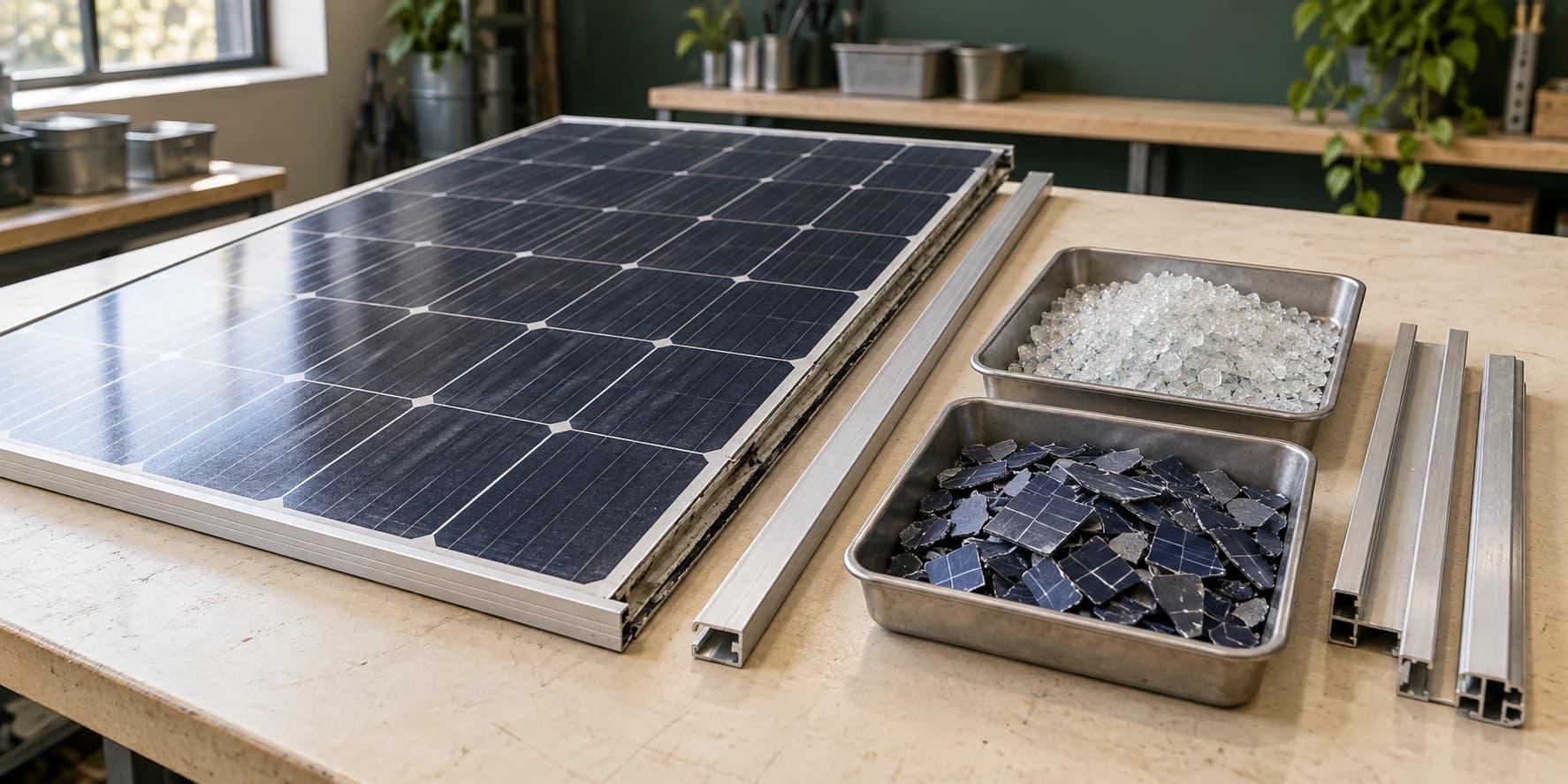
New South Wales is moving to establish Australia’s first mandatory product stewardship scheme for solar panels as the volume of end-of-life photovoltaic infrastructure begins to increase.
The NSW Government announced the proposal on 21 September 2026. According to the NSW EPA, more than 1.18 million rooftop solar systems are installed across NSW and approximately 14,000 tonnes of solar-panel waste is already generated each year. That figure is forecast to increase to approximately 89,000 tonnes annually by 2045.
Under the proposed scheme, businesses supplying regulated photovoltaic panels into NSW would be required to participate in arrangements supporting the collection, recycling and recovery of end-of-life panels.
The proposed regulation covers rooftop and utility-scale panels entering NSW, while portable panels and associated accessories such as cables, racking, inverters and battery storage systems are outside the proposed scope. Consultation on the draft regulation is open until 16 November 2026.
A new generation of environmental legacy
For environmental professionals, the announcement raises a broader and interesting issue.
When we consider potentially contaminating activities during environmental due diligence, attention naturally falls on historical industrial uses: service stations, gasworks, dry cleaners, landfills, manufacturing facilities, chemical storage and heavy industry.
But the environmental history of land is continually being written. Australia’s transition towards renewable energy is creating an entirely new generation of infrastructure — solar farms, battery facilities, substations and associated supply chains.
Most of these developments provide substantial environmental benefits during their operating lives. Nevertheless, like all infrastructure, their materials will eventually require decommissioning, recycling or disposal.
The NSW proposal recognises that responsibility for those materials needs to be considered throughout the product lifecycle rather than only when a waste problem emerges.
Environmental due diligence changes with the economy
This is why historical land-use information is so important. An activity that appears environmentally benign today may have implications that become apparent only after technologies, scientific knowledge or regulation change.
Environmental due diligence therefore needs to evolve alongside industry. The list of activities relevant to future site investigations will not necessarily be identical to the list practitioners relied upon twenty years ago.
Solar infrastructure may be one example. Battery storage, new manufacturing processes and emerging waste streams will provide others.
Where Enviro-D fits
The proposed NSW solar-panel stewardship scheme is primarily a recycling reform. Viewed through a land and environmental due-diligence lens, however, it is also a reminder of why current and historical land-use intelligence matters: today’s infrastructure becomes tomorrow’s site history.